
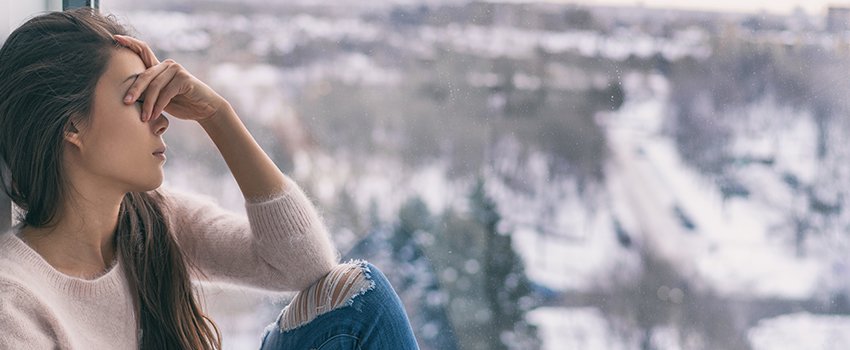
Who Is Most at Risk for Seasonal Affective Disorder? This is a bit of a trick question. Anyone can develop seasonal affective disorder. However, research seems to indicate that more women than men are affected—and it typically affects more young adults than those in later years. If you’re experiencing SAD, you might have a wide range of symptoms affecting both your physical and mental health.
Seasonal Affective Disorder Symptoms
- Appetite changes
- Depression
- General discontent
- Loneliness
- Mood swings
- Sadness
- Social isolation
- Weight gain
- Lack of concentration
Why Am I Feeling So Blue This Winter Season?
Some level of feeling the blues is normal during the winter months when it’s colder and darker outside. That’s not what SAD is, though. SAD is a form of depression that occurs more often during these months. Researchers aren’t entirely sure why, but it appears to be tied to shorter days with less light and colder temperatures. As we spend more time indoors, our bodies do not receive their normal exposure to natural light.How to Treat SAD
- Take medication, as prescribed by a physician.
- Consume more fatty fish and seafood.
- Eat more mushrooms.
- Include egg yolks in your diet.
- Take a vitamin D supplement, if advised by a physician.
- Try a UV lamp.